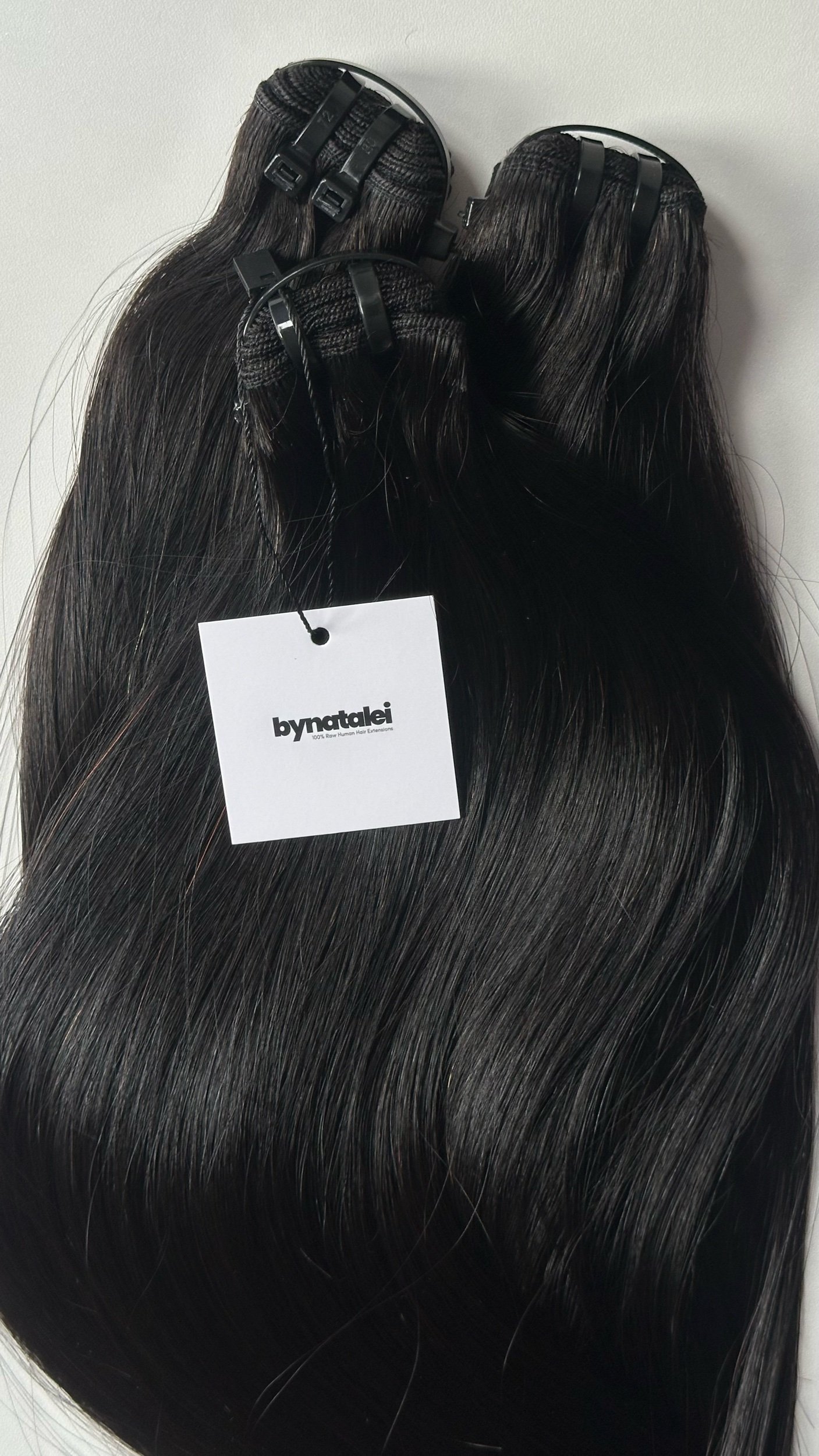
Vietnamese Straight vs Indian Loose Wavy: Understanding the Difference in Raw Hair
When choosing raw hair, quality is only part of the equation.
How the hair behaves, how it moves, blends, and wears over time, matters just as much.
Two of the most requested textures at BYNATALEI are Vietnamese straight and Indian loose wavy.
Both are raw. Both are intentionally sourced. But they offer distinctly different experiences.
Understanding these differences helps you choose hair that enhances your natural base, not works against it.
Colour & Visual Appearance
One of the first differences you’ll notice is tone.
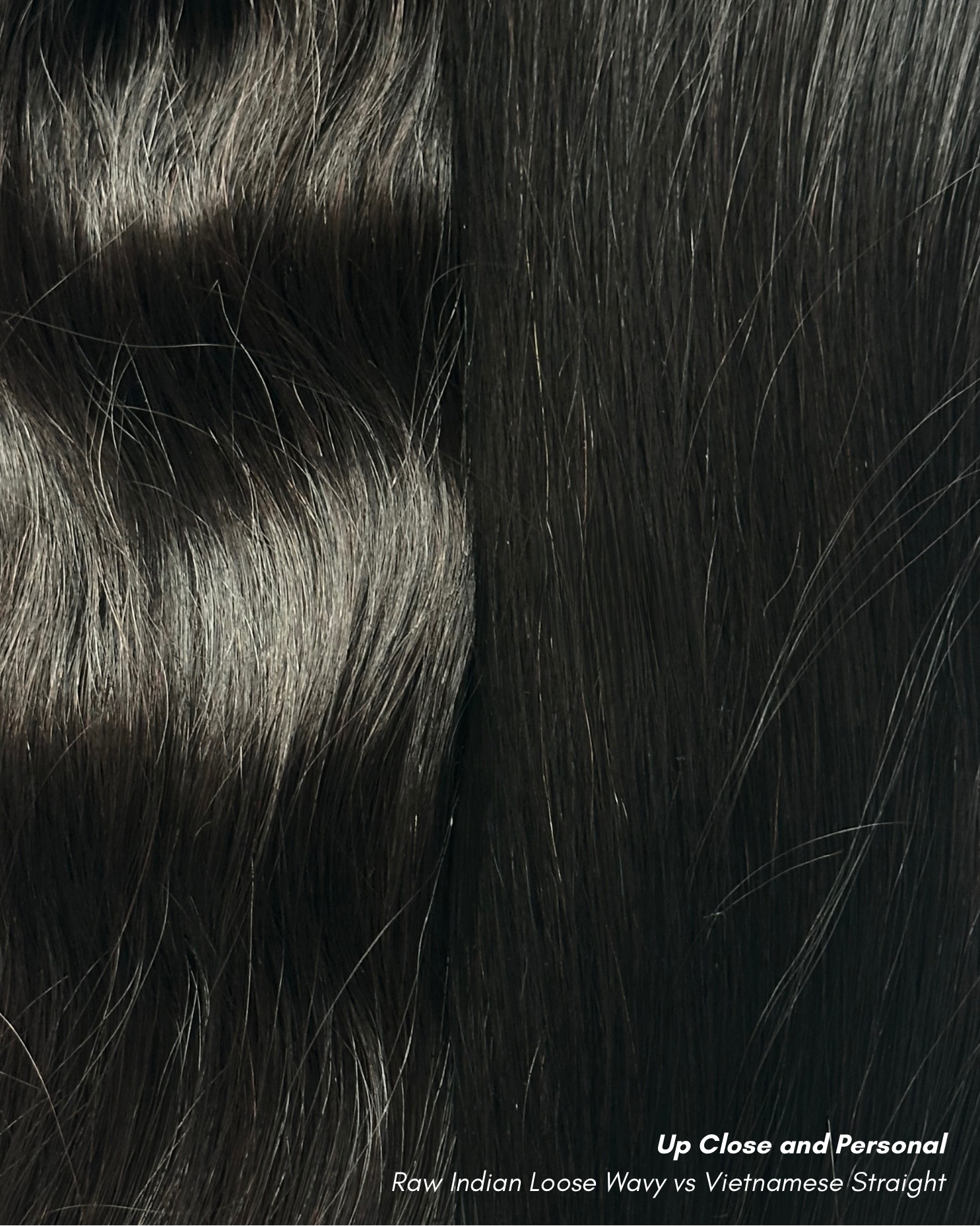
Vietnamese straight hair typically appears in uniform dark brown to near-black shades, often with cooler or neutral undertones. The colour tends to be consistent from root to tip, contributing to its sleek, polished appearance straight out of the bundle.
Indian loose wavy hair can also range from dark brown to black, but often shows slightly warmer undertones and natural variation. Combined with its wave pattern, this creates more depth and dimension visually.
Texture & Movement
Vietnamese straight hair is known for its smooth cuticle alignment and natural density. It falls in a clean, uninterrupted line and maintains a glossy finish with minimal styling. This makes it ideal for those who prefer sleek looks, middle parts, or polished everyday wear.
Indian loose wavy hair offers softness and natural movement. The wave pattern gives the hair an airy, effortless feel, with more visible texture and bounce. It blends particularly well with textured or naturally wavy natural hair bases.
In short:
Vietnamese hair = sleek, structured, refined
Indian hair = soft, fluid, naturally expressive
Density & Feel
Vietnamese hair typically feels heavier and denser due to its strand thickness and straight pattern. This gives it a full look even with fewer grams.
Indian loose wavy hair often feels lighter, with volume coming from movement rather than weight. The wave pattern creates fullness without heaviness.
This distinction matters when choosing how much hair you need and how you want it to sit and blend with your base.
Styling, Maintenance & Longevity
Both textures are raw and long-lasting when cared for properly, but their needs differ slightly.
Vietnamese straight hair:
Holds sleek styles exceptionally well
Resists tangling due to smooth cuticles
Requires minimal daily manipulation
Takes colour and heat evenly
Indian loose wavy hair:
Offers natural volume and texture
Benefits from consistent hydration
Requires light styling to maintain wave pattern
Blends seamlessly with textured natural hair
Choosing between them often comes down to lifestyle and styling preference rather than durability.
Colouring & Customisation
Vietnamese hair’s consistent cuticle structure often makes it easier to lift and colour evenly, especially for jet black or custom dark tones.
Indian hair can also be coloured successfully, but its texture and variation mean results may appear more dimensional, particularly when maintaining the wave pattern.
The BYNATALEI Approach
At BYNATALEI, we don’t believe in pushing a single “best” option.
We believe in:
Transparency over trends
Education over assumptions
Enhancement, not concealment
Your hair extensions should work with your natural base, supporting its health, integrity, and movement.
Both Vietnamese straight and Indian loose wavy hair are premium choices. The right one is simply the one that aligns with how you want your hair to behave.
When you choose intentionally, the result feels effortless.
Explore our collections at bynatalei.com
Enhancement, not concealment. Always.